Back

Webinar

Latest — Aug 29, 2025
Incident response planning — preparedness vs. reality

Introduction

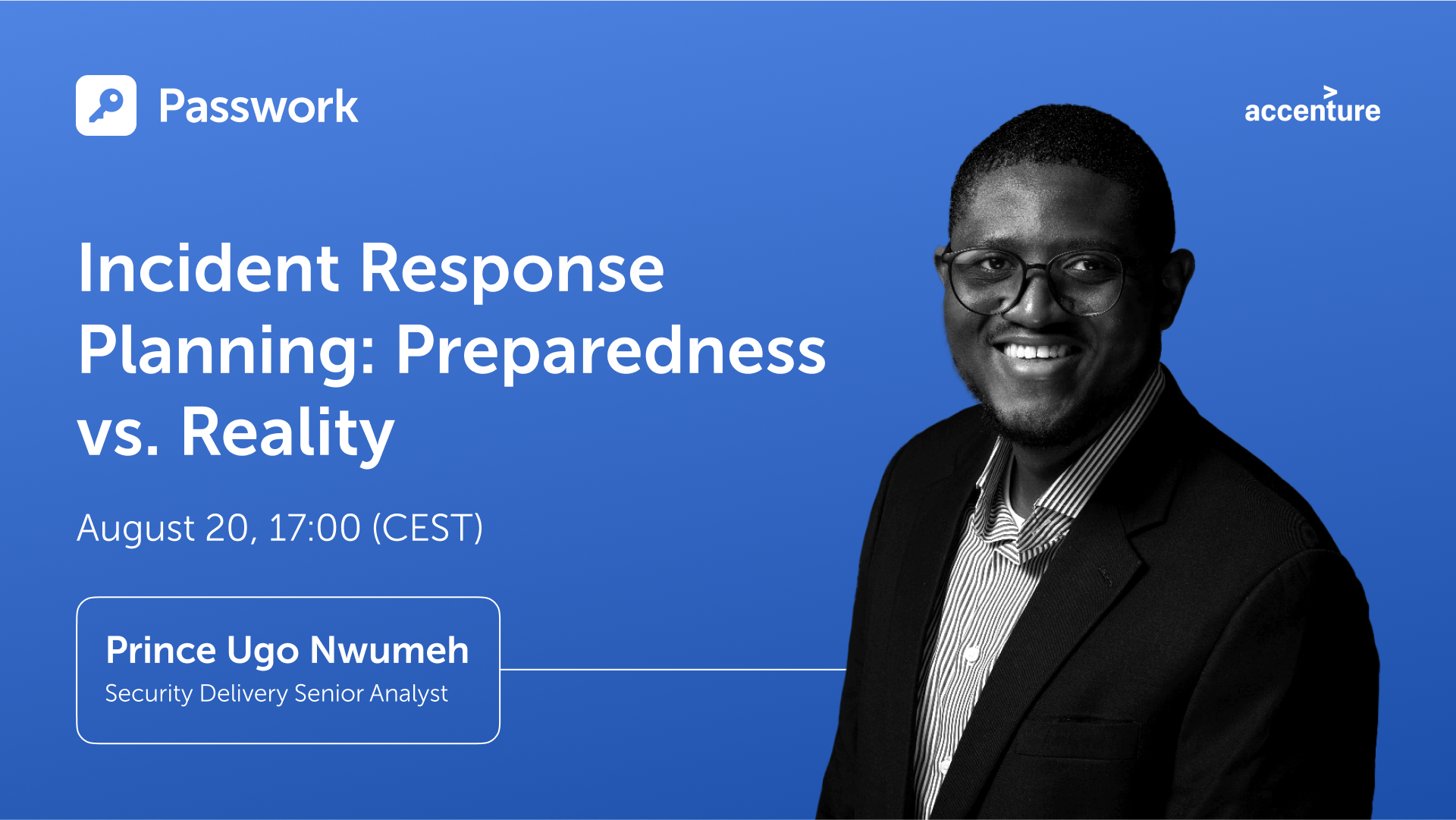
As cyber threats continue to evolve, organizations face increasing pressure to respond quickly and effectively to security incidents. But how well do incident response plans hold up when theory meets reality? This was the central theme of the Passwork cybersecurity webinar in August 2025, featuring insights from Prince Ugo Nwume, cybersecurity consultant at Accenture, and CircleMac, host of the Passwork webinar series. 

Preparation and real-world testing

Incident response plans must be living documents, not static checklists. While tabletop exercises help teams understand their roles, only real-world simulations expose true gaps in preparedness. Annual testing is the bare minimum, in regulated industries, quarterly or biannual reviews are often required.

"Tabletop exercises are great, but you need more — actual crisis simulations and drills show what works and what doesn't" — Prince Ugo Nwume

Drills and red team challenges frequently reveal overlooked weaknesses. The cybersecurity consultant recalled a load balancer left at a disaster recovery site that unexpectedly became an entry point for attackers. Continuous improvement requires immediate after-action reviews, regular updates to playbooks, and staff training that directly addresses real-world gaps.

Coordination across teams and vendors

Clear communication and decision-making authority are critical. Effective incident response depends on cross-functional cooperation among IT, legal, HR, communications, and business units. A dedicated incident coordinator helps ensure priorities are aligned and decisions are made without delay.

"When an incident happens, every team has its priorities. You need defined lines of communication and authority — otherwise, you risk making the situation worse." — Prince Ugo Nwume

Third-party vendors, including cloud providers, add another layer of risk. Contracts should specify SLAs, audit rights, and clear escalation procedures for incident response.

"Third-party risk is always a challenge — you need to safeguard your business by demanding strong security practices from vendors" — Prince Ugo Nwume

Tools and technologies for an effective response

Technology is at the core of rapid incident response. Password managers help organizations accelerate credential resets, simplify access reviews, and contain breaches more effectively. Best practices include enterprise-wide adoption, regular audits, and immediate credential changes during an incident.

"Password managers make it easier to change credentials, monitor access, and prevent attackers from persisting in your environment" — Prince Ugo Nwume

Cloud-native environments introduce both simplicity and complexity. Shared responsibility requires clear definitions of what belongs to the organization versus the provider. Rapid communication channels and frequent contract reviews are essential for compliance and responsiveness.

Measure success by checking KPIs and benchmarks:

  • Mean time to detect
  • Mean time to resolve
  • False positive rates

Tracking these metrics over time enables organizations to refine their incident response programs and adapt to emerging threats.

Compliance and continuous improvement

Global organizations must align with evolving legal and regulatory requirements through annual reviews, gap assessments, and GRC oversight.

"Compliance is a moving target. You need standardized frameworks and regular gap assessments to keep up." — Prince Ugo Nwume

But technical controls alone are not enough. Responding to major incidents places enormous pressure on people. Prince stressed the importance of caring for teams.

"You need to support your team — reward their effort and build a culture where people want to step up when it matters" — Prince Ugo Nwume

Shift rotations, recognition, and a culture of resilience help ensure teams stay motivated and capable during prolonged crises.

Conclusion

Incident response planning requires ongoing preparation, cross-team collaboration, and continuous improvement. As the cybersecurity consultant highlighted, real adaptability comes from robust controls, practical training, and a culture of vigilance. Tools like Passwork and standardized procedures are essential, but success depends on adaptability and teamwork. Incident response plans must be living documents, not static checklists.

  • Preparation and practice are key
  • Cross-functional coordination and clear authority are essential
  • Password managers are a cornerstone of rapid response
  • Global compliance requires standardized frameworks
  • Team resilience and well-being matter
Ready to take the first step? Try Passwork with a free demo and explore practical ways to protect your business.

Further reading

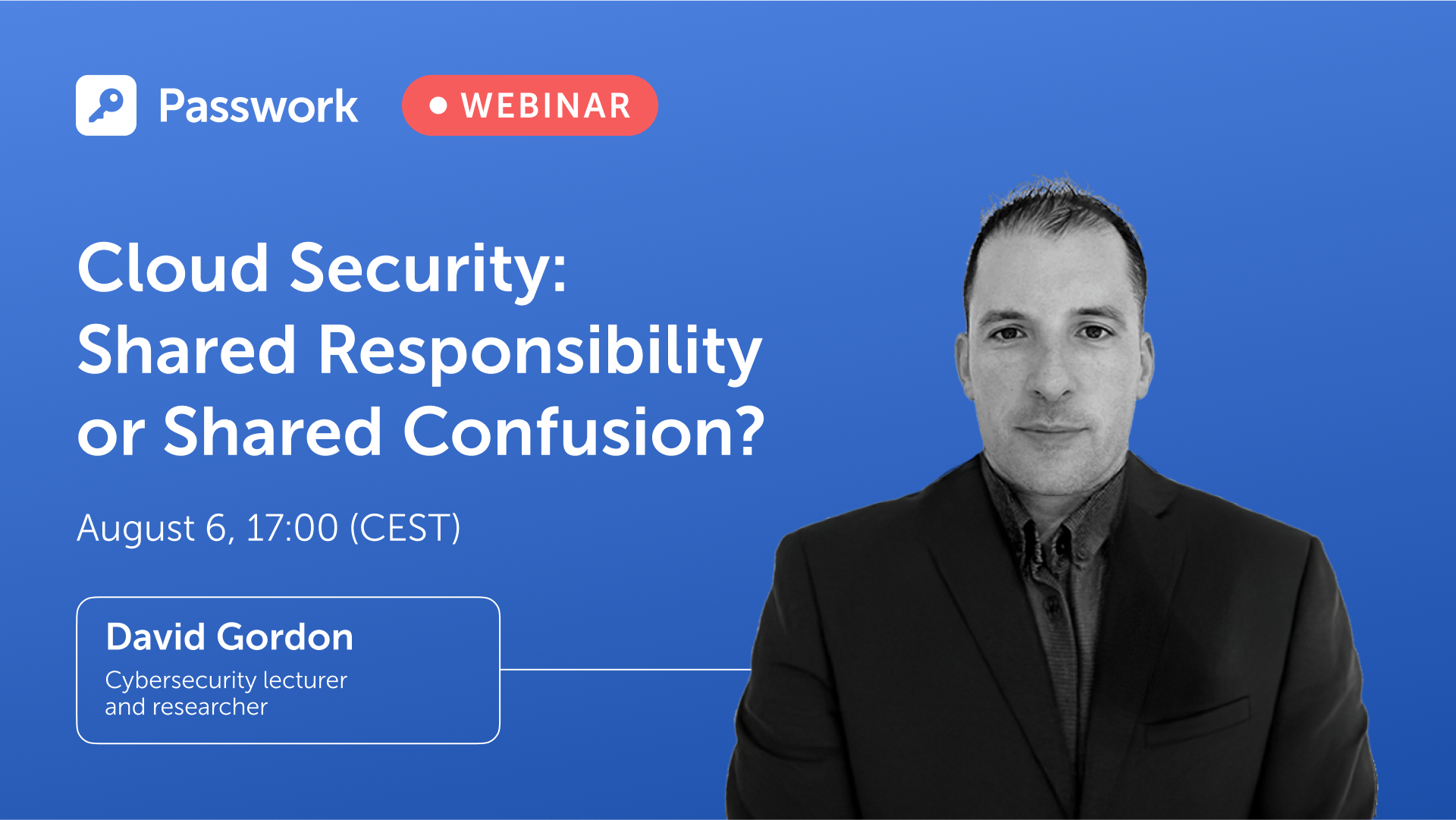
Cloud security: Shared responsibility or shared confusion?
Table of contents * Introduction * The shared responsibility model: Theory vs practice * Where ambiguity leads to risk * Contracts, fine print, and operational realities * Lessons learned: Avoiding misconfiguration * Conclusion Introduction Cloud security remains one of the most debated topics in modern IT. As organizations continue their migration to cloud platforms, the question
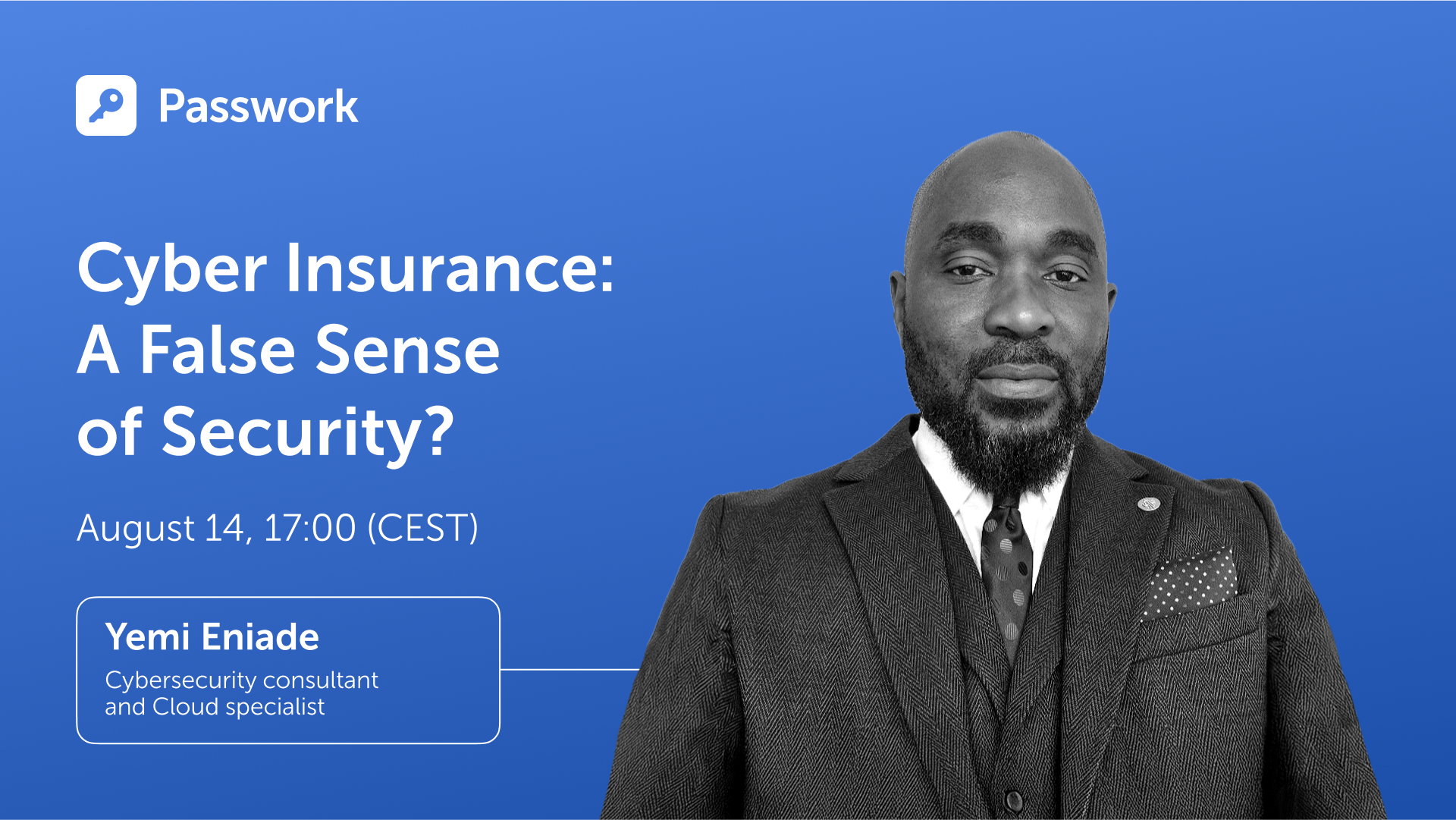
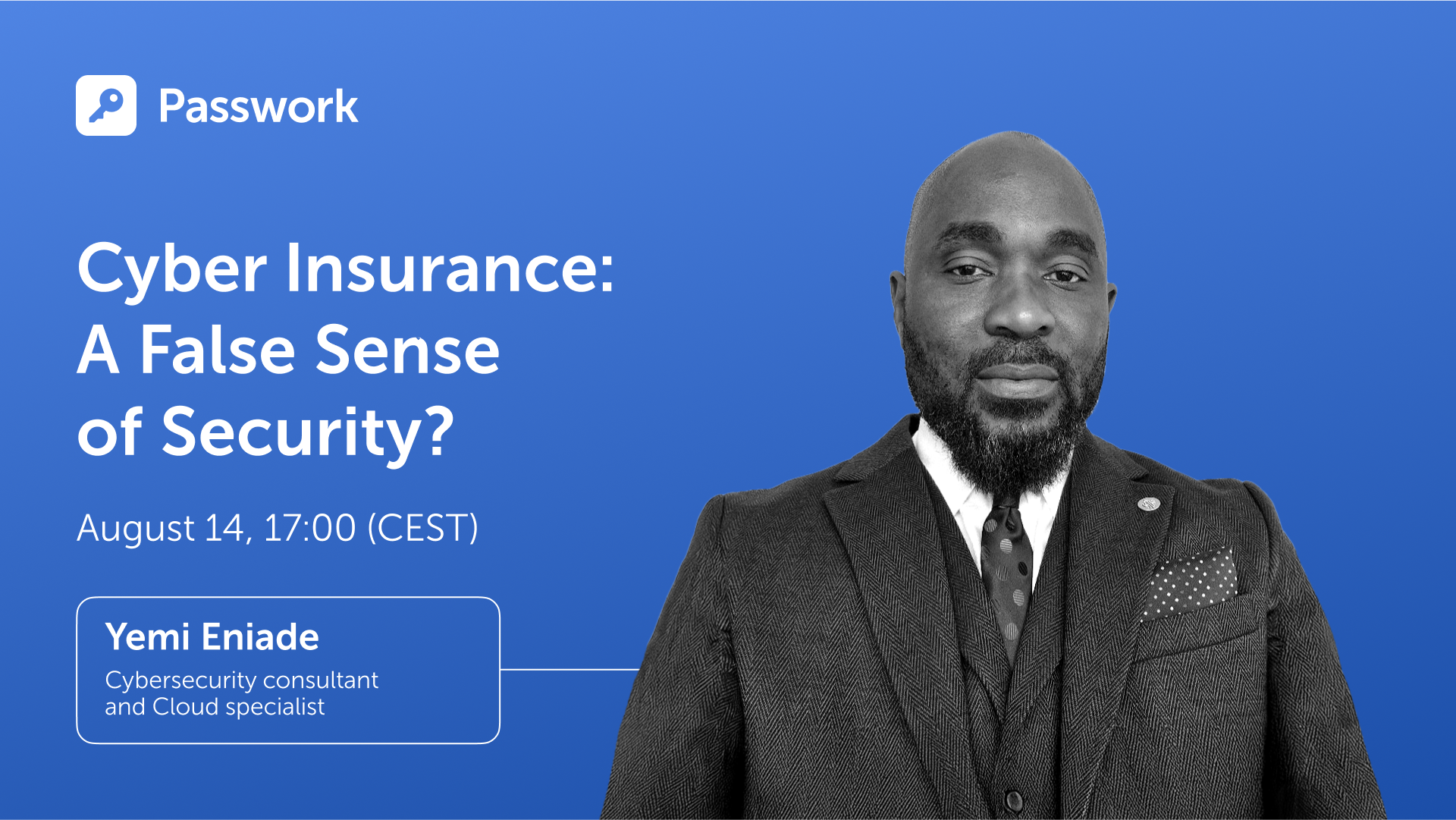
Cyber insurance: A false sense of security?
Table of contents * Introduction * Cyber insurance: What does it cover? * The day-to-day reality of cybersecurity * Navigating Global Compliance * The rewards and challenges of cybersecurity * Conclusion Introduction As cyber threats and data breaches become more frequent and sophisticated, many organizations are looking to cyber insurance as a way to manage risk.
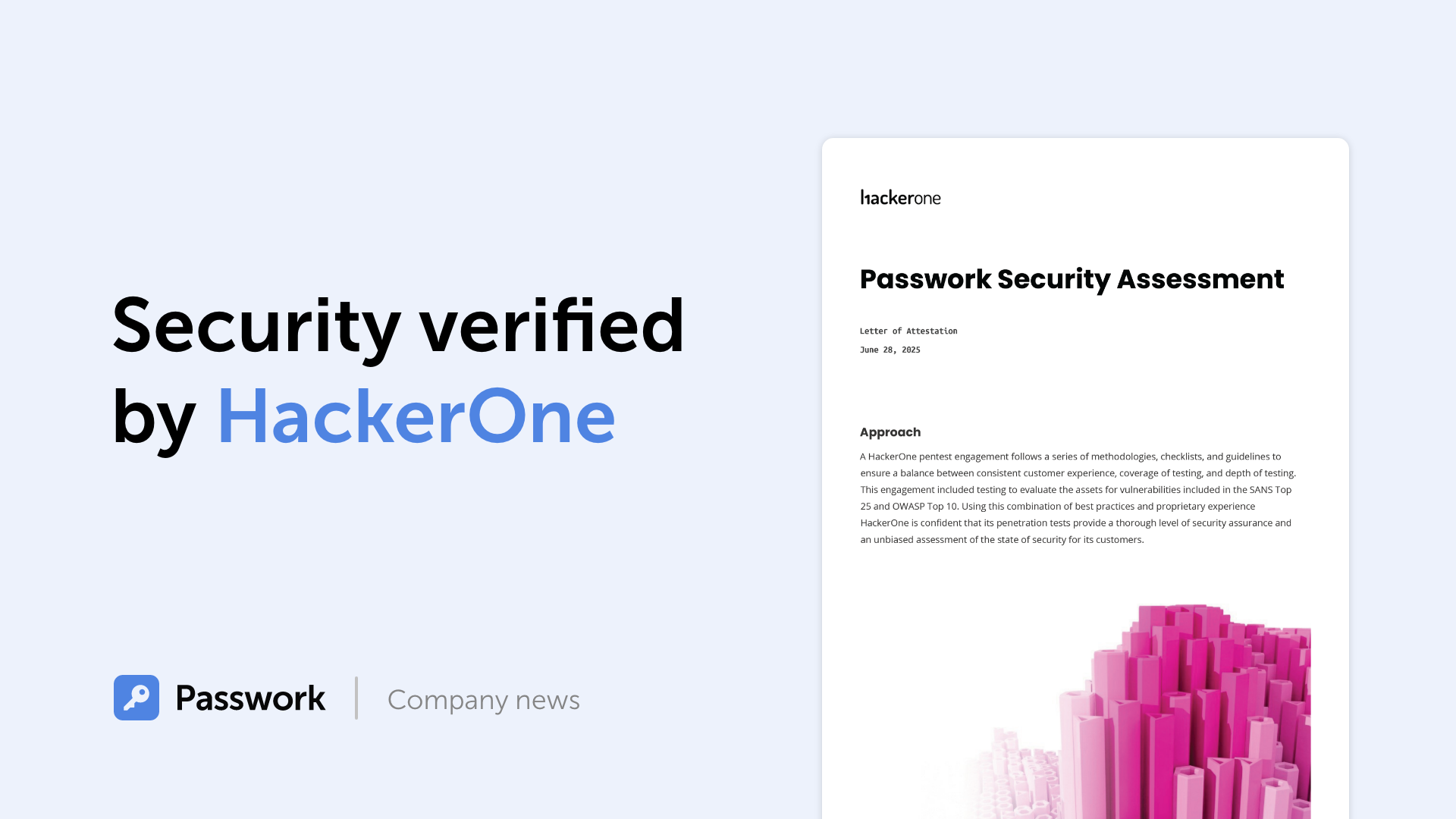
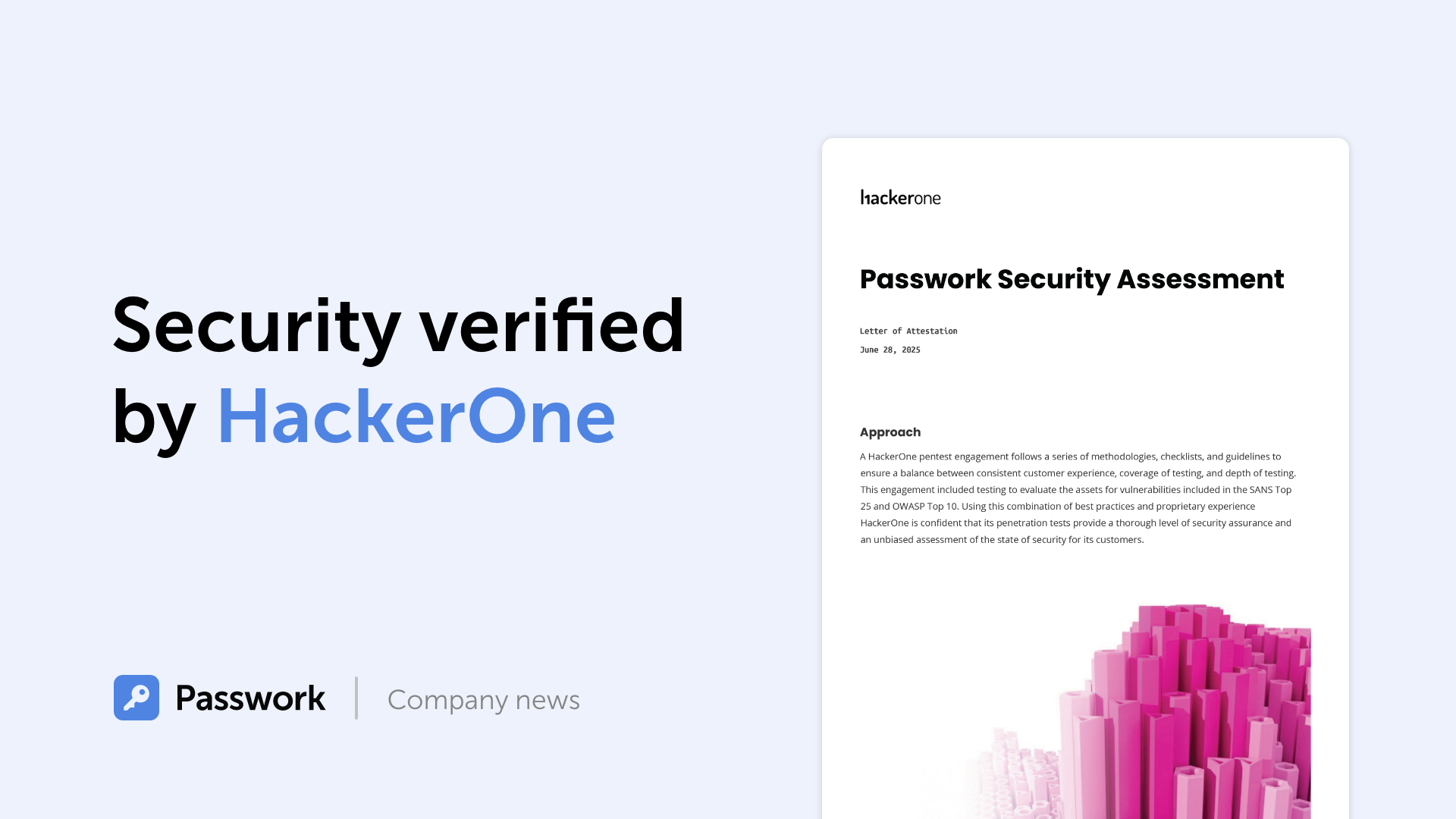
Passwork 7: Security verified by HackerOne
Passwork has successfully completed the penetration testing, carried out by HackerOne — the world’s largest platform for coordinating bug bounty programs and security assessments. This independent evaluation confirmed Passwork’s highest level of data protection and strong resilience against modern cyber threats. What the pentest covered Security architecture and data

Incident response planning: Preparedness vs. reality

Aug 21, 2025 — 5 min read
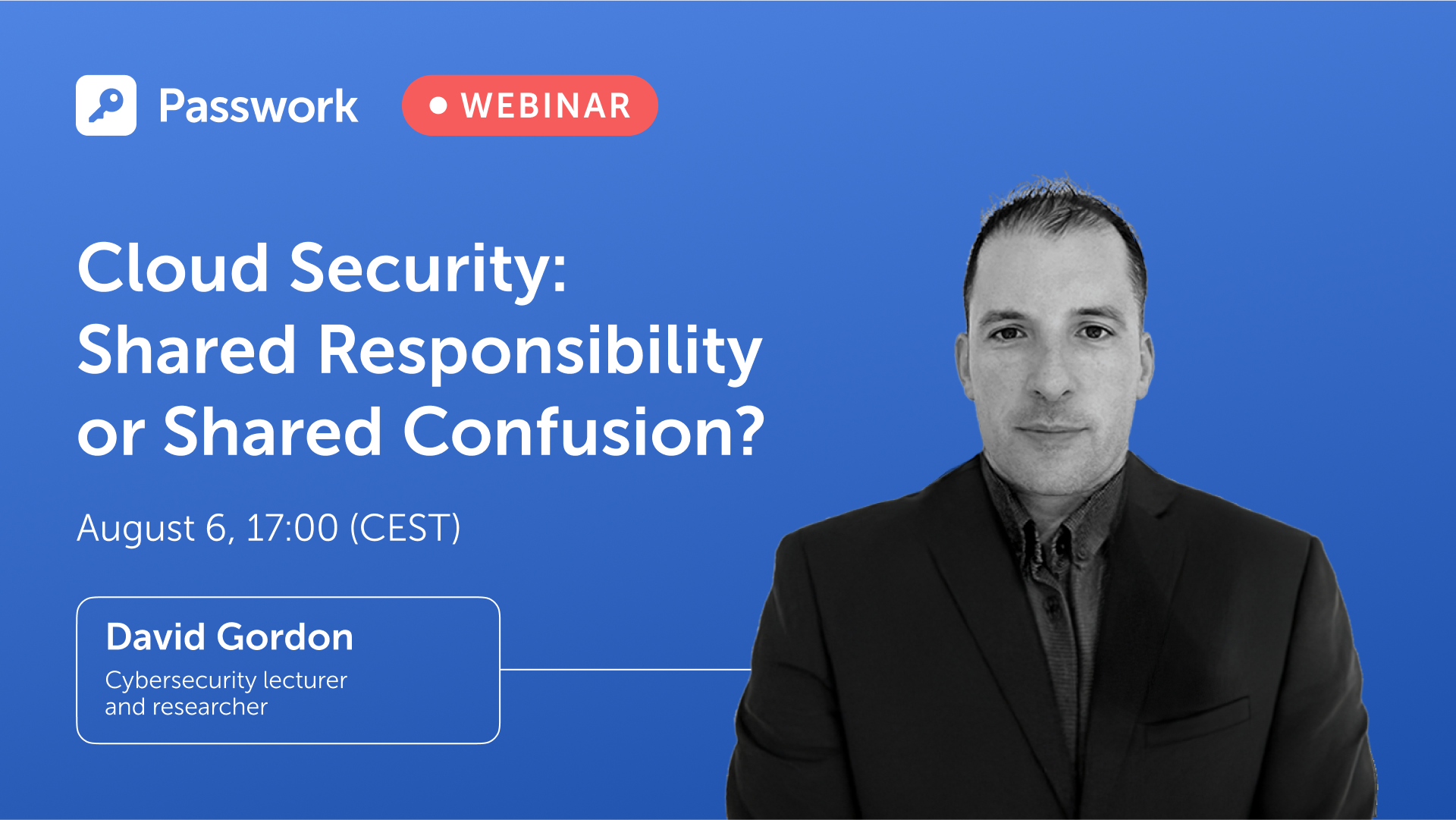
Cloud security: Shared responsibility or shared confusion?

Introduction

Cloud security remains one of the most debated topics in modern IT. As organizations continue their migration to cloud platforms, the question of "Who is responsible for what?" grows increasingly complex. In our latest Passwork webinar, cybersecurity lecturer David Gordon joined host Turpal to unpack the realities behind the shared responsibility model and why clear boundaries are still elusive for many teams.

"The shared responsibility model is a fundamental concept in cloud security that delineates where the cloud provider’s responsibilities begin and end, and where the client’s responsibilities begin and end" — David Gordon

The session explored practical examples, common pitfalls, and actionable strategies for CISOs and IT leaders navigating the blurred lines between cloud provider and client responsibilities.

The shared responsibility model: Theory vs practice

At its core, the shared responsibility model defines the security obligations of both the cloud provider (e.g., AWS, Azure) and the client. The provider is responsible for securing the infrastructure and network, while the client manages data, applications, and configuration within the cloud environment.

However, these boundaries shift depending on the service model:

  • Infrastructure as a service (IaaS). Clients carry most of the security burden, from OS patches to identity management.
  • Platform as a service (PaaS). Responsibility is more balanced, with providers handling the platform and clients managing data and application logic.
  • Software as a service (SaaS). Providers handle most security aspects, but clients must still manage user access and data governance.

While the model is theoretically clear, David highlighted that practical applications can sometimes be a little complex due to the dynamic nature of cloud services.

Where ambiguity leads to risk

Ambiguity in the shared responsibility model has been the root cause of several high-profile breaches. One of the most cited examples is the misconfiguration of AWS S3 buckets. Despite AWS securing the underlying infrastructure, clients failed to set proper permissions, resulting in sensitive data exposure.

"Some overly permissive permissions were granted to these S3 buckets, and that led to sensitive data being exposed to the public. That type of scenario is unfortunately not uncommon." — David Gordon

Other common missteps include:

  • Misconfigured identity and access management (IAM) rules
  • Failure to implement multi-factor authentication (MFA) on critical accounts
  • Assuming implicit security without verifying configurations

The lesson: never assume security is "built-in" by default. Clients must proactively manage their configurations and understand the nuances of each cloud service model.

Contracts, fine print, and operational realities

Cloud provider contracts aim to define shared security responsibilities, but operational realities often diverge from contractual language. CISOs and IT leaders must scrutinize the fine print, looking for:

  • Clear delineation of responsibilities. Understand exactly what the provider covers and what is left to the client.
  • Incident response procedures. Who is responsible for breach notification, investigation, and remediation?
  • Audit rights and transparency. Can you validate the provider’s controls and monitor their compliance?
  • Service-level agreements (SLAs). Are uptime, recovery, and security guarantees realistic and enforceable?

David cautioned that the detailed operational implications are sometimes not as clear as the contract language suggests, underscoring the need for ongoing review and negotiation.

Lessons learned: Avoiding misconfiguration

A recurring theme in the discussion was that most cloud-related incidents are not caused by flaws in the provider’s infrastructure, but rather by preventable mistakes made by clients. The biggest culprits are misconfigured permissions, lack of monitoring, and weak identity practices. These errors underscore the importance of treating configuration management as an ongoing discipline rather than a one-time setup. Training teams, conducting regular checks, and utilizing automated tools can significantly mitigate these risks.

"Just never assume implicit security. Yes, the cloud provider is responsible for the infrastructure, but you, the client, are 100% responsible for how you configure permissions on the cloud." — David Gordon

The webinar highlighted real-world strategies for minimizing risk and confusion:

  • Continuous education. Train teams to understand their responsibilities and the specifics of each cloud service model.
  • Regular audits. Periodically review configurations, permissions, and access controls.
  • Automated monitoring. Leverage tools to detect misconfigurations and anomalous activity in real time.
  • Collaborative planning. Foster open communication among security, IT, and business units to ensure a shared understanding.

Conclusion

Cloud security is not a static checklist — it is an ongoing partnership between provider and client. As David Gordon emphasized, "never assume implicit security." Success requires vigilance, clear communication, and a willingness to adapt as cloud services evolve.

  • The shared responsibility model is clear in theory, but ambiguous in practice
  • Misconfiguration, especially of storage and access controls, remains a leading cause of cloud breaches
  • Contracts should be reviewed for operational clarity, not just legal protection
  • Ongoing education, monitoring, and cross-team collaboration are essential for effective cloud security

At Passwork, we help organizations navigate the complexities of cloud security with tools that empower proactive management, robust access controls, and real-time monitoring. By understanding your responsibilities and building resilient processes, you can turn shared confusion into shared success.

Interested in more practical insights on cloud security? Stay tuned for our next webinar, explore our resources on password management, compliance, and insider threat prevention.

Further reading

Cyber insurance: A false sense of security?
Table of contents * Introduction * Cyber insurance: What does it cover? * The day-to-day reality of cybersecurity * Navigating Global Compliance * The rewards and challenges of cybersecurity * Conclusion Introduction As cyber threats and data breaches become more frequent and sophisticated, many organizations are looking to cyber insurance as a way to manage risk.
Why do employees ignore cybersecurity policies?
Employees often ignore cybersecurity rules not out of laziness, but because they feel generic, irrelevant, or disconnected from real work. True change starts with empathy, leadership, and context-driven policies. Read the full article to learn how to make security stick.
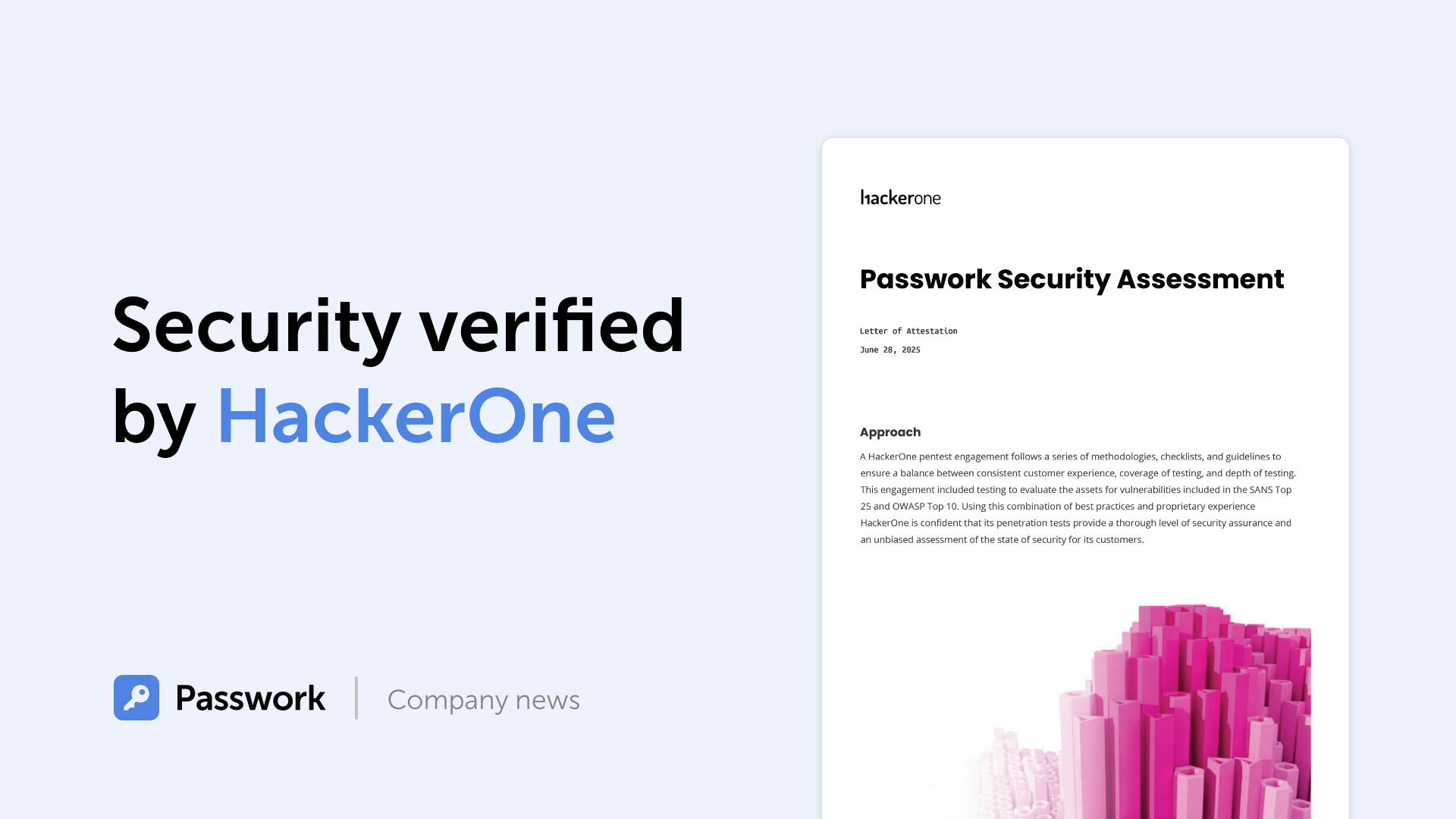
Passwork 7: Security verified by HackerOne
Passwork has successfully completed the penetration testing, carried out by HackerOne — the world’s largest platform for coordinating bug bounty programs and security assessments. This independent evaluation confirmed Passwork’s highest level of data protection and strong resilience against modern cyber threats. What the pentest covered Security architecture and data

Cloud security: Shared responsibility or shared confusion?

Aug 21, 2025 — 5 min read
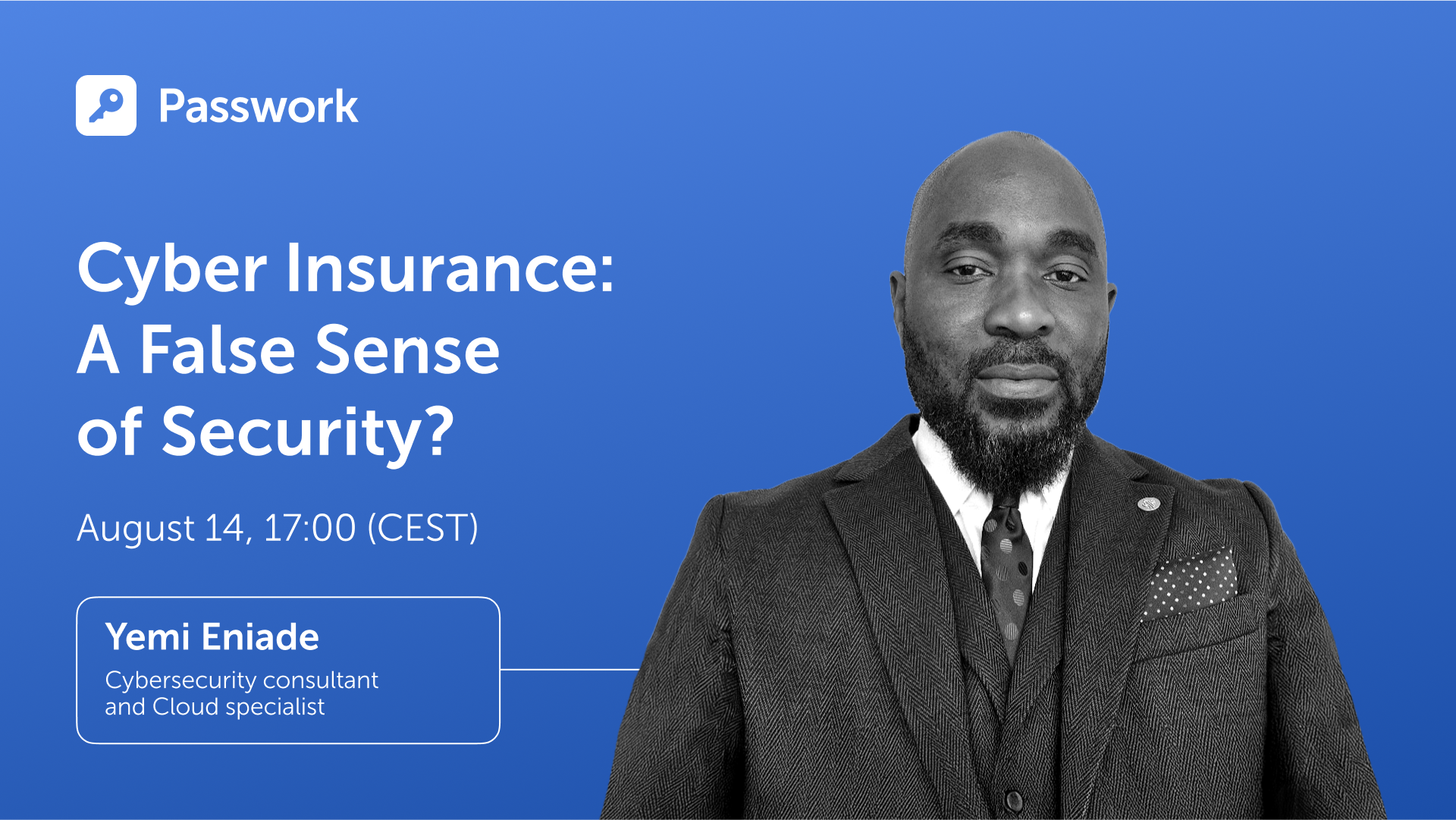
Cyber insurance: A false sense of security?

Introduction

As cyber threats and data breaches become more frequent and sophisticated, many organizations are looking to cyber insurance as a way to manage risk. But is cyber insurance a true safety net — or is it just a false sense of security? This question was at the core of the Password Cybersecurity Webinar, featuring insights from Yemi Eniade, a cybersecurity architect with a global perspective and decades of hands-on experience.

Cyber insurance: What does it cover? 

Yemi Eniade highlighted a critical issue: many organizations misunderstand what cyber insurance provides. While insurance can help mitigate financial losses after an incident, it is not a replacement for strong cybersecurity fundamentals.

"Insurance is not a substitute for robust security controls. It’s a tool, but some organizations see it as the solution instead of part of a bigger strategy. Many organizations misunderstand what is covered. You have to read the policy carefully — don’t assume you’re protected from everything just because you have a certificate on the wall." — Yemi Eniade

Many policies are filled with exclusions and limitations. For example, if an incident is caused by poor configuration or a lack of basic controls, coverage may be denied. Regulatory fines and business interruptions are also often misunderstood.

Key points discussed:

  • Insurance doesn’t cover everything. There are many exclusions, especially around preventable incidents.
  • Policy terms matter. Organizations need to carefully read and understand their coverage.
  • Security maturity is required. Insurers increasingly demand proof of strong controls before issuing or renewing policies.

The day-to-day reality of cybersecurity

Drawing on his journey from the Royal Navy to cybersecurity consultancy, Yemi described the ever-changing nature of the field:

"No two days are the same. Yesterday, you might have been managing vulnerabilities, today, it’s about system design. You always have to be on your toes — just like in the military." — Yemi Eniade

He credits his military background with giving him the discipline and decision-making skills needed to thrive in a high-pressure cybersecurity environment.

What Yemi values most:

  • The challenge of solving new problems every day
  • The satisfaction of turning threats into opportunities
  • The necessity of lifelong learning

Yemi’s work spans multiple continents, meaning he must constantly adapt to different regulatory environments:

  • Europe: GDPR, ISO 27001
  • USA: Sector-specific laws (e.g., FDA)
  • China: Strict data privacy and localization laws
"My project is global. The product is global. We have to deal with different laws and standards — GDPR in Europe, FDA in America, and privacy laws in China. The only way to manage is through strict company policy and a strong quality management system." — Yemi Eniade

The cybersecurity architect emphasized that a robust Quality Management System (QMS) and adherence to international standards are essential for maintaining compliance and security across regions.

The rewards and challenges of cybersecurity

The intellectual thrill of solving complex problems is balanced by the constant pressure of staying ahead of attackers. For every breakthrough moment, such as stopping a phishing campaign or closing a critical vulnerability, there is stress from long hours, shifting priorities, and the knowledge that an overlooked detail could have massive consequences. Therefore, cybersecurity leaders must find motivation in the process itself, such as building resilient systems and guiding teams through uncertainty. They must also recognize that their work directly safeguards people, businesses, and, in some cases, even national security.

"Sometimes, it’s overwhelming. You have meetings late at night or early in the morning. But you have to be happy to do what you’re doing — that’s what keeps me going." — Yemi Eniade

Rewards:

  • Intellectual stimulation from constant change
  • Working with diverse, international teams
  • Making a real impact by protecting organizations and individuals

Challenges:

  • Maintaining work-life balance, especially with teams in multiple time zones
  • The emotional and mental toll of being "always on"
  • Keeping up with new threats and evolving regulations

Conclusion 

Cyber insurance can be a valuable part of an organization's risk management strategy, but it is not a guarantee against cyber threats. As Yemi Eniade emphasized, true security comes from robust controls, continuous learning, and a culture of vigilance. Insurance is just one piece of the puzzle — real resilience requires preparation, adaptability, and a commitment to best practices.

  • Cyber insurance is not a cure-all: It should complement, not replace, a comprehensive security program.
  • Know your policy: Understand exactly what is covered, and what is not.
  • Global compliance is complex: Standardized frameworks and policies are crucial for navigating international regulations.
  • Stay adaptable: Cybersecurity is always evolving — success depends on staying alert, informed, and proactive.
Interested in more practical insights on cloud security? Stay tuned for our next webinar, explore our resources on password management, compliance, and insider threat prevention.

Further reading

HIPAA requirements for password management
Table of contents * Introduction * How HIPAA works * Cybersecurity and clinical efficiency * HIPAA and password management * How to train staff to meet HIPAA standards * How Passwork supports HIPAA compliance * Sustainable HIPAA compliance Introduction In the complex ecosystem of modern healthcare, patient data is essential for secure management. In 2024, the U.
Insider threats: Prevention vs. privacy
Insider threats are a major cybersecurity risk, often overlooked. Prevention requires balancing trust and security focus on monitoring risk-based behaviors, not constant surveillance. Use AI for early detection, educate staff, and be transparent to foster trust while protecting data.
Passwork 7: Security verified by HackerOne
Passwork has successfully completed the penetration testing, carried out by HackerOne — the world’s largest platform for coordinating bug bounty programs and security assessments. This independent evaluation confirmed Passwork’s highest level of data protection and strong resilience against modern cyber threats. What the pentest covered Security architecture and data

Cyber insurance: A false sense of security?

Jul 16, 2025 — 5 min read
Insider threats: Prevention vs. privacy — webinar recap

Introduction

Insider threats account for a significant portion of cybersecurity incidents, yet they remain one of the least understood and most challenging risks to mitigate. Whether caused by malicious intent or negligence, insider threats can have devastating consequences, especially when sensitive data is involved.

During the webinar, Senior Executive in Infrastructure and Security Georgi Petrov shared his insights on how Malta Gaming Authority (MGA) manages insider threats while safeguarding trust within the organization. From Edward Snowden’s infamous whistleblowing to phishing attacks that exploit inattentiveness, the discussion emphasized the importance of proactive strategies that address both technical and human vulnerabilities.

At the end of the day, everybody is susceptible to data leaks. Every organization will face insider threats eventually — it’s not a matter of if, but when.
— Georgi Petrov

What are insider threats?

Insider threats refer to the risks posed by individuals within an organization, such as employees, contractors, or partners, who misuse their access to sensitive data or systems. These threats can be categorized into two types:

  • Malicious insiders: Individuals who intentionally harm the organization, such as stealing data or sabotaging systems.
  • Negligent insiders: Individuals who unintentionally compromise security, often due to ignorance or carelessness.

Georgi emphasized that insider threats often arise from poor system design, inadequate controls, or malicious intent. Addressing these vulnerabilities requires a combination of robust security frameworks and education.

You need to ensure that your insider threat program collects the right type of data — not everything. Focus on metadata, not sensitive content, and always ask: Why am I collecting this information? How does it help safeguard the organization?
— Georgi Petrov

Ethical dilemmas: Surveillance vs. privacy

One of the most debated topics during the webinar was whether insider threat monitoring programs merely serve as a facade for surveillance. Georgi argued that monitoring is not inherently invasive if implemented responsibly. The key is to collect only what is necessary — metadata rather than sensitive content — and to be transparent with employees.

For example: Instead of logging every keystroke or web browsing activity, organizations should focus on detecting risk-based behaviors, such as attempts to access unauthorized data or upload files to cloud storage.

Transparency and clear communication are vital. Employees need to understand that monitoring is designed to protect the organization, not to spy on them. This approach fosters trust while maintaining security.

We are not the big brother. We’re here to protect the organization’s cybersecurity posture, not to track employee activities unnecessarily.
— Georgi Petrov

Insiders vs. outsiders: Who poses a bigger risk?

When asked who poses a greater risk — trusted insiders or outsiders with limited access — Georgi provided a nuanced perspective:

  • Outsiders: Unpredictable and capable of exploiting vulnerabilities to escalate privileges, which makes them harder to control.
  • Insiders: More predictable and manageable through safeguards like role-based access controls and monitoring.
An outsider with minimal credentials can often pose a bigger risk because they’re unpredictable. They might escalate privileges or exploit vulnerabilities, which can be devastating for an organization.
— Georgi Petrov

Separating signals from noise

Monitoring tools generate vast amounts of data, making it challenging to distinguish genuine threats from irrelevant noise. Georgi stressed the importance of context in threat detection:

  • Noise: Routine activities, such as a finance employee downloading spreadsheets during end-of-quarter reporting.
  • Signal: Abnormal behaviors, such as an offboarding employee attempting to access and upload sensitive files to cloud storage.
The moment it becomes a signal is when you see abnormal activity — like accessing sensitive folders unrelated to their department or trying to exfiltrate data. That’s when you flip the switch and investigate.
— Georgi Petrov

Predictive vs. reactive threat detection

Should insider threat programs shift from reactive detection to predictive prevention? Georgi strongly advocated for predictive approaches that leverage AI and machine learning to identify subtle patterns that human analysts might miss.

For example: In a reactive system, an employee gradually exfiltrating files over weeks could evade detection. However, predictive tools can identify abnormal patterns and flag potential threats early.

Predictive prevention minimizes the damage caused by insider threats by allowing organizations to act before incidents escalate.

Balancing trust and security

Continuous monitoring can create a culture of mistrust among employees. To strike a balance, Georgi recommended the following:

  • Transparency: Clearly communicate what is being monitored and why.
  • Risk-based monitoring: Focus on behaviors that indicate potential threats rather than conducting blanket surveillance.
  • Education: Regularly train employees on cybersecurity best practices to reduce negligence-based risks.

The main point: Trust and security are not mutually exclusive. By fostering a culture of transparency and education, organizations can build trust while maintaining robust defenses.

Trust, but verify. Build a culture of trust, educate your employees, and configure your monitoring tools to focus on risk-based behaviors — not constant surveillance.
— Georgi Petrov

Key takeaways

  • Collect meaningful data: Avoid over-monitoring and focus on metadata and risk-based behaviors.
  • Adopt predictive tools: Use AI to identify patterns and prevent threats before they occur.
  • Foster trust: Transparency and education are essential for balancing security with employee confidence.
  • Prepare for the inevitable: Insider threats are not a matter of "if" but "when". A multilayered approach ensures resilience.

Conclusion

Insider threats present a complex challenge for organizations, requiring them to navigate the fine line between prevention and privacy. As Georgi Petrov highlighted during the webinar, the key lies in building a culture of trust, implementing risk-based monitoring, and adopting predictive tools to stay ahead of threats.

At Passwork, we empower organizations with tools that enhance security without compromising trust. From managing passwords securely to fostering a culture of cybersecurity awareness, our solutions are designed to help you protect what matters most.

Ready to take your insider threat prevention to the next level? Explore Passwork today and see how we can help you safeguard your organization while maintaining employee trust.

Further reading:

Why do employees ignore cybersecurity policies?
Employees often ignore cybersecurity rules not out of laziness, but because they feel generic, irrelevant, or disconnected from real work. True change starts with empathy, leadership, and context-driven policies. Read the full article to learn how to make security stick.
Private password breach checking: A new algorithm for secure password validation
Table of contents * Introduction * Existing solutions and their tradeoffs * Our innovation: Obfuscated deterministic bloom filter indices * Key benefits: Bridging the privacy-performance gap * Real-world applications: Transforming password security * Conclusion: A new era in password security Introduction Data breaches have become routine: millions of users worldwide face the consequences of compromised passwords.
Common myths about password managers
Worried that password managers are risky or hard to use? It’s time to rethink. In this article, we debunk common myths about password managers, break down how they actually work, and show why solutions like Passwork are vital for your cybersecurity. Learn how these tools keep your data protected.

Insider threats: Prevention vs. privacy

Insider threats are a major cybersecurity risk, often overlooked. Prevention requires balancing trust and security focus on monitoring risk-based behaviors, not constant surveillance. Use AI for early detection, educate staff, and be transparent to foster trust while protecting data.

May 16, 2025 — 5 min read
Unpacking the gap between compliance and culture

Introduction

Companies spend millions on cybersecurity policies — but often overlook the human side of enforcement. Why do employees ignore security rules, even when they’re clearly defined and regularly updated? And how can organizations shift from checkbox compliance to genuine behavioral change?

These were the big questions tackled in our latest Passwork cybersecurity webinar, featuring ISO 27001 consultant and ISMS Copilot founder, Tristan Roth. Together, we explored how companies can strengthen security culture, align leadership and compliance teams, and ultimately get employees to care about cybersecurity policies.

This article highlights the key insights from that discussion, offering a practical roadmap for businesses aiming to turn policy fatigue into proactive security awareness.

The compliance trap: Why policies fall flat

According to a 2024 ISACA survey, just 38% of organizations believe their compliance efforts have improved their actual security posture. The rest? Going through the motions.

They want to be ISO-certified in three weeks. They write 50 documents, sign them, and think the job is done. But there’s no substance. And without substance, there’s nothing to embed into company culture.
Tristan Roth

Tristan noted that many companies pursue ISO 27001 purely for external reasons — sales pressure, vendor demands, regulatory requirements. But this "checkbox compliance" mindset often leads to rushed implementations, shallow training, and policies that nobody reads.

That’s precisely why meaningful certifications stand out. As a case in point, Passwork itself recently achieved ISO/IEC 27001:2022 certification — a milestone that underscores our commitment not just to technical excellence, but to real, operational security practices. You can view the certification details here. For us, it’s not about the certificate on the wall — it’s about living the standard in our day-to-day approach to product design, customer trust, and internal controls.

The real reason employees tune out

It's easy to blame employees for ignoring security policies. But in many cases, they’re not wrong to do so.

Tristan described how companies often copy-paste policy templates from the internet without adapting them to their specific context. A policy meant for
a university might get handed to a startup team. A remote work rule might ignore hybrid realities.

If a policy obviously doesn’t reflect your real work environment, of course employees will skip it. They know when no effort was made.

This disconnect between policy and reality creates distrust. Employees learn
to view documentation as bureaucracy, not guidance.

Training vs. transformation

Security training is everywhere — but it’s often treated like background noise.

Tristan emphasized that truly effective awareness programs require empathy, relevance, and context. Instead of one-size-fits-all e-learning modules, what works best is direct, human conversation. Sitting down with small groups. Tailoring sessions to different roles. Explaining why a policy exists, not just what it says.

Sometimes, the most effective approach is doing things that don’t scale. A 10-person training session can do more than a 2-hour video everyone skips.

This type of pedagogy isn’t flashy — but it changes behavior. It creates a feedback loop between employees and security teams that policy documents alone can’t.

Third-party risk: The unseen threat

In 2024, over 60% of data breaches were linked to third parties. Yet many organizations still conduct vendor assessments as a one-time task during onboarding — and never revisit them.

The companies I work closest with — I know the people. And if something changes, I can ask for proof, or pivot fast. That’s the mindset companies need to adopt.

Tristan warned against over-relying on surface-level due diligence. He stressed the importance of designating a responsible person (even in small companies) to build real relationships with vendors, revisit risk exposure over time, and keep alternative solutions in mind for business continuity.

According to Verizon’s Data Breach Investigations Report (DBIR), over 80% of hacking-related breaches still involve stolen or reused credentials.

Despite having password policies in place, many companies don’t monitor whether employees actually follow them. Shared passwords in messaging apps, weak variations of old passwords, or resistance to using MFA — these are all symptoms of convenience overriding policy.

A good password policy isn’t enough. You need to design systems assuming passwords will be compromised — and build defenses like MFA around that assumption.

Passwork and similar tools offer self-hosted or cloud-based solutions, but Tristan’s advice was clear: tools help, but they don’t replace responsibility. Compliance teams need to combine tech with empathy, audits, and clear communication.

Automating GRC without alienation

Automation can cut Governance, Risk management and Compliance (GRC) workloads by up to 60%, but it’s not a silver bullet. Poorly implemented tools can actually increase policy fatigue.

Some platforms take ten times longer than Excel. People go back to Excel — not because they don’t believe in compliance, but because the tool wasn’t built with their workflow in mind.

Instead of aiming for “full automation,” companies should focus on effective automation — solutions that reduce friction, not increase it. This means assigning a project owner, setting realistic expectations, and piloting changes before rolling them out at scale.

Leadership role in building security-first culture

Cybersecurity is often seen as an IT issue, but real change starts with leadership.

A recent PWC survey found that 80% of executives say they prioritize security — yet only 30% of CISOs feel supported. Tristan argued that this misalignment often stems from poor communication.

Security leaders need to speak the language of business. Not vulnerability management. Risk in financial terms. Loss potential. Mitigation cost. Impact.

CISOs must become translators — connecting security risks to business outcomes. When leadership understands the stakes in terms they care about, support and budget follow.

Final thoughts

Employees ignore cybersecurity policies not because they’re lazy — but because the policies feel irrelevant, the training feels generic, and the tools feel like obstacles.

Shifting that mindset requires a cultural transformation: from compliance to care, from documentation to dialogue. As Tristan put it, be the captain of your own security ship. Know your context. Use the tools wisely. But lead with empathy and clarity.

Ready to take the first step? Request a free demo and explore how Passwork helps your team move from policy fatigue to security-first thinking.

Further reading:

Four ways to make users love password security
Identifying fake apps on your smartphone
The necessity of cyber hygiene training in today’s digital world
Information security (IS) courses are needed not only for IS department employees and not even only for certain employees of a company but for everyone. Information security training in today’s world, where virtually all areas of life have been digitized, should be on par with fire safety and other fundamental

Why do employees ignore cybersecurity policies?

Employees often ignore cybersecurity rules not out of laziness, but because they feel generic, irrelevant, or disconnected from real work. True change starts with empathy, leadership, and context-driven policies. Read the full article to learn how to make security stick.