Introduction
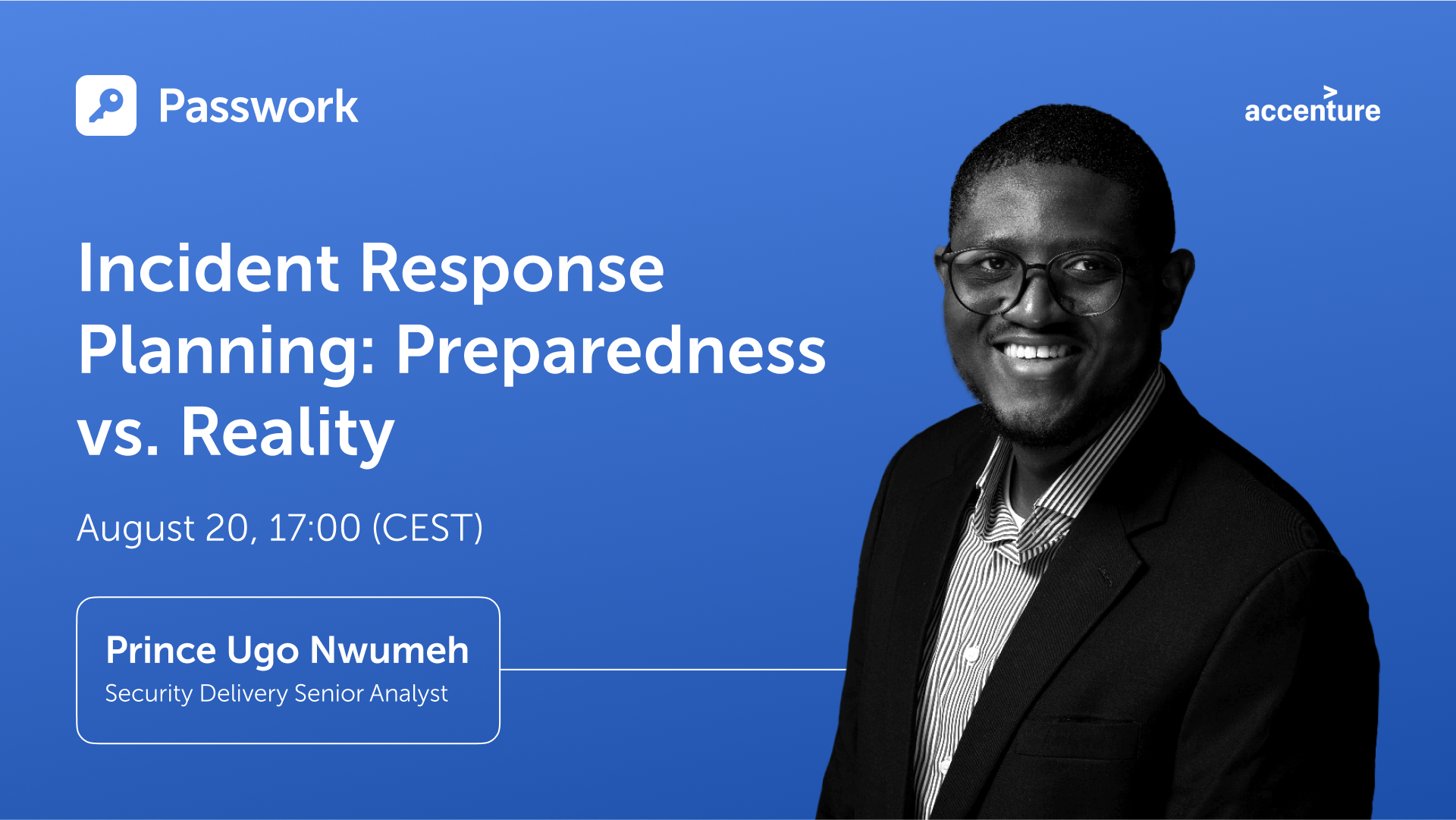
As cyber threats continue to evolve, organizations face increasing pressure to respond quickly and effectively to security incidents. But how well do incident response plans hold up when theory meets reality? This was the central theme of the Passwork cybersecurity webinar in August 2025, featuring insights from Prince Ugo Nwume, cybersecurity consultant at Accenture, and CircleMac, host of the Passwork webinar series.
Preparation and real-world testing
Incident response plans must be living documents, not static checklists. While tabletop exercises help teams understand their roles, only real-world simulations expose true gaps in preparedness. Annual testing is the bare minimum, in regulated industries, quarterly or biannual reviews are often required.
"Tabletop exercises are great, but you need more — actual crisis simulations and drills show what works and what doesn't" — Prince Ugo Nwume
Drills and red team challenges frequently reveal overlooked weaknesses. The cybersecurity consultant recalled a load balancer left at a disaster recovery site that unexpectedly became an entry point for attackers. Continuous improvement requires immediate after-action reviews, regular updates to playbooks, and staff training that directly addresses real-world gaps.
Coordination across teams and vendors
Clear communication and decision-making authority are critical. Effective incident response depends on cross-functional cooperation among IT, legal, HR, communications, and business units. A dedicated incident coordinator helps ensure priorities are aligned and decisions are made without delay.
"When an incident happens, every team has its priorities. You need defined lines of communication and authority — otherwise, you risk making the situation worse." — Prince Ugo Nwume
Third-party vendors, including cloud providers, add another layer of risk. Contracts should specify SLAs, audit rights, and clear escalation procedures for incident response.
"Third-party risk is always a challenge — you need to safeguard your business by demanding strong security practices from vendors" — Prince Ugo Nwume
Tools and technologies for an effective response
Technology is at the core of rapid incident response. Password managers help organizations accelerate credential resets, simplify access reviews, and contain breaches more effectively. Best practices include enterprise-wide adoption, regular audits, and immediate credential changes during an incident.
"Password managers make it easier to change credentials, monitor access, and prevent attackers from persisting in your environment" — Prince Ugo Nwume
Cloud-native environments introduce both simplicity and complexity. Shared responsibility requires clear definitions of what belongs to the organization versus the provider. Rapid communication channels and frequent contract reviews are essential for compliance and responsiveness.
Measure success by checking KPIs and benchmarks:
- Mean time to detect
- Mean time to resolve
- False positive rates
Tracking these metrics over time enables organizations to refine their incident response programs and adapt to emerging threats.
Compliance and continuous improvement
Global organizations must align with evolving legal and regulatory requirements through annual reviews, gap assessments, and GRC oversight.
"Compliance is a moving target. You need standardized frameworks and regular gap assessments to keep up." — Prince Ugo Nwume
But technical controls alone are not enough. Responding to major incidents places enormous pressure on people. Prince stressed the importance of caring for teams.
"You need to support your team — reward their effort and build a culture where people want to step up when it matters" — Prince Ugo Nwume
Shift rotations, recognition, and a culture of resilience help ensure teams stay motivated and capable during prolonged crises.
Conclusion
Incident response planning requires ongoing preparation, cross-team collaboration, and continuous improvement. As the cybersecurity consultant highlighted, real adaptability comes from robust controls, practical training, and a culture of vigilance. Tools like Passwork and standardized procedures are essential, but success depends on adaptability and teamwork. Incident response plans must be living documents, not static checklists.
- Preparation and practice are key
- Cross-functional coordination and clear authority are essential
- Password managers are a cornerstone of rapid response
- Global compliance requires standardized frameworks
- Team resilience and well-being matter
Further reading
 Turpal Makh
 Turpal Makh
 Eirik Salmi