Introduction
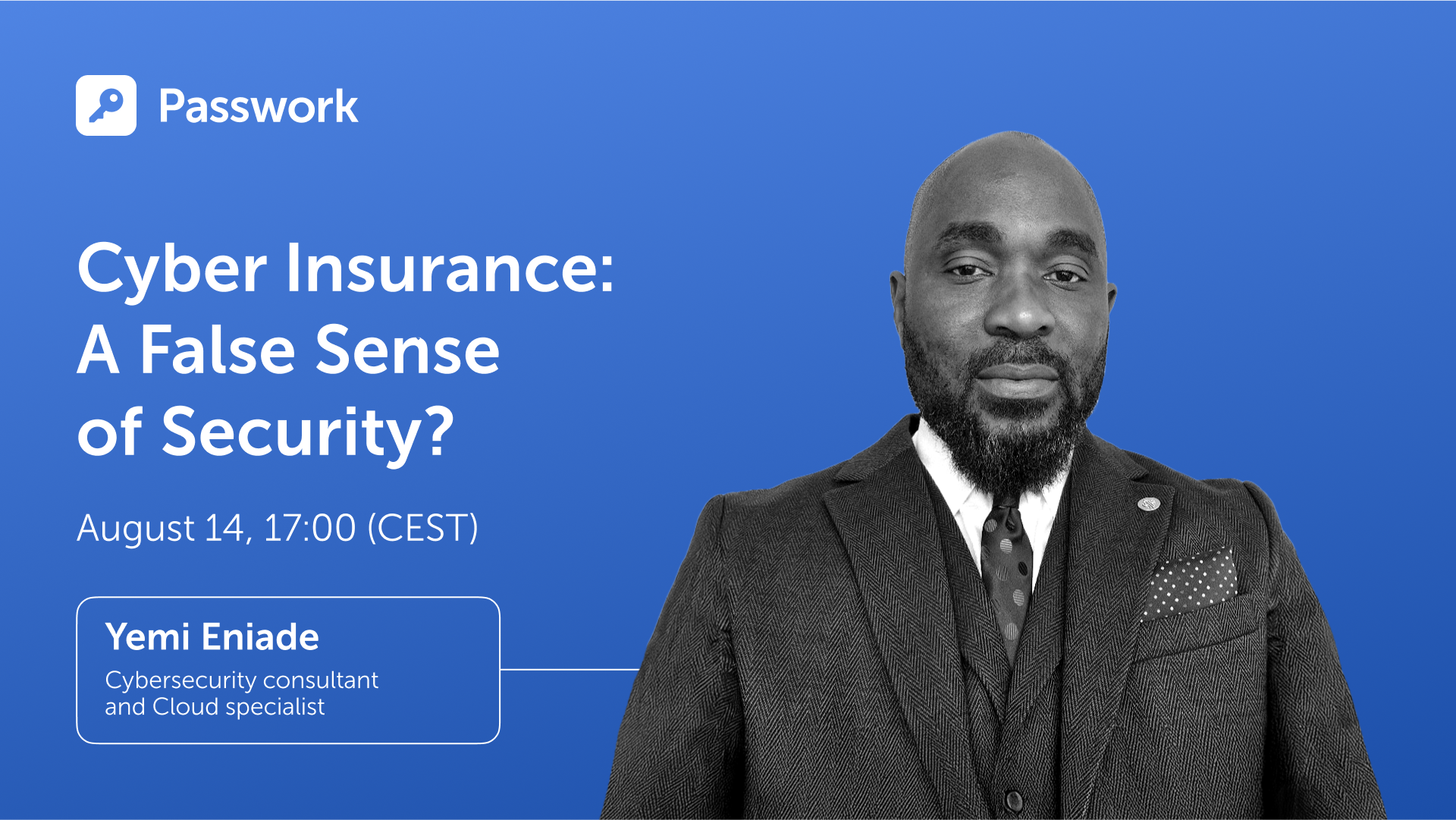
As cyber threats and data breaches become more frequent and sophisticated, many organizations are looking to cyber insurance as a way to manage risk. But is cyber insurance a true safety net — or is it just a false sense of security? This question was at the core of the Password Cybersecurity Webinar, featuring insights from Yemi Eniade, a cybersecurity architect with a global perspective and decades of hands-on experience.
Cyber insurance: What does it cover?
Yemi Eniade highlighted a critical issue: many organizations misunderstand what cyber insurance provides. While insurance can help mitigate financial losses after an incident, it is not a replacement for strong cybersecurity fundamentals.
"Insurance is not a substitute for robust security controls. It’s a tool, but some organizations see it as the solution instead of part of a bigger strategy. Many organizations misunderstand what is covered. You have to read the policy carefully — don’t assume you’re protected from everything just because you have a certificate on the wall." — Yemi Eniade
Many policies are filled with exclusions and limitations. For example, if an incident is caused by poor configuration or a lack of basic controls, coverage may be denied. Regulatory fines and business interruptions are also often misunderstood.
Key points discussed:
- Insurance doesn’t cover everything. There are many exclusions, especially around preventable incidents.
- Policy terms matter. Organizations need to carefully read and understand their coverage.
- Security maturity is required. Insurers increasingly demand proof of strong controls before issuing or renewing policies.
The day-to-day reality of cybersecurity
Drawing on his journey from the Royal Navy to cybersecurity consultancy, Yemi described the ever-changing nature of the field:
"No two days are the same. Yesterday, you might have been managing vulnerabilities, today, it’s about system design. You always have to be on your toes — just like in the military." — Yemi Eniade
He credits his military background with giving him the discipline and decision-making skills needed to thrive in a high-pressure cybersecurity environment.
What Yemi values most:
- The challenge of solving new problems every day
- The satisfaction of turning threats into opportunities
- The necessity of lifelong learning
Navigating Global Compliance
Yemi’s work spans multiple continents, meaning he must constantly adapt to different regulatory environments:
- Europe: GDPR, ISO 27001
- USA: Sector-specific laws (e.g., FDA)
- China: Strict data privacy and localization laws
"My project is global. The product is global. We have to deal with different laws and standards — GDPR in Europe, FDA in America, and privacy laws in China. The only way to manage is through strict company policy and a strong quality management system." — Yemi Eniade
The cybersecurity architect emphasized that a robust Quality Management System (QMS) and adherence to international standards are essential for maintaining compliance and security across regions.
The rewards and challenges of cybersecurity
The intellectual thrill of solving complex problems is balanced by the constant pressure of staying ahead of attackers. For every breakthrough moment, such as stopping a phishing campaign or closing a critical vulnerability, there is stress from long hours, shifting priorities, and the knowledge that an overlooked detail could have massive consequences. Therefore, cybersecurity leaders must find motivation in the process itself, such as building resilient systems and guiding teams through uncertainty. They must also recognize that their work directly safeguards people, businesses, and, in some cases, even national security.
"Sometimes, it’s overwhelming. You have meetings late at night or early in the morning. But you have to be happy to do what you’re doing — that’s what keeps me going." — Yemi Eniade
Rewards:
- Intellectual stimulation from constant change
- Working with diverse, international teams
- Making a real impact by protecting organizations and individuals
Challenges:
- Maintaining work-life balance, especially with teams in multiple time zones
- The emotional and mental toll of being "always on"
- Keeping up with new threats and evolving regulations
Conclusion
Cyber insurance can be a valuable part of an organization's risk management strategy, but it is not a guarantee against cyber threats. As Yemi Eniade emphasized, true security comes from robust controls, continuous learning, and a culture of vigilance. Insurance is just one piece of the puzzle — real resilience requires preparation, adaptability, and a commitment to best practices.
- Cyber insurance is not a cure-all: It should complement, not replace, a comprehensive security program.
- Know your policy: Understand exactly what is covered, and what is not.
- Global compliance is complex: Standardized frameworks and policies are crucial for navigating international regulations.
- Stay adaptable: Cybersecurity is always evolving — success depends on staying alert, informed, and proactive.
Further reading
 Ana Moore
 Turpal Mahaev
 Eirik Salmi